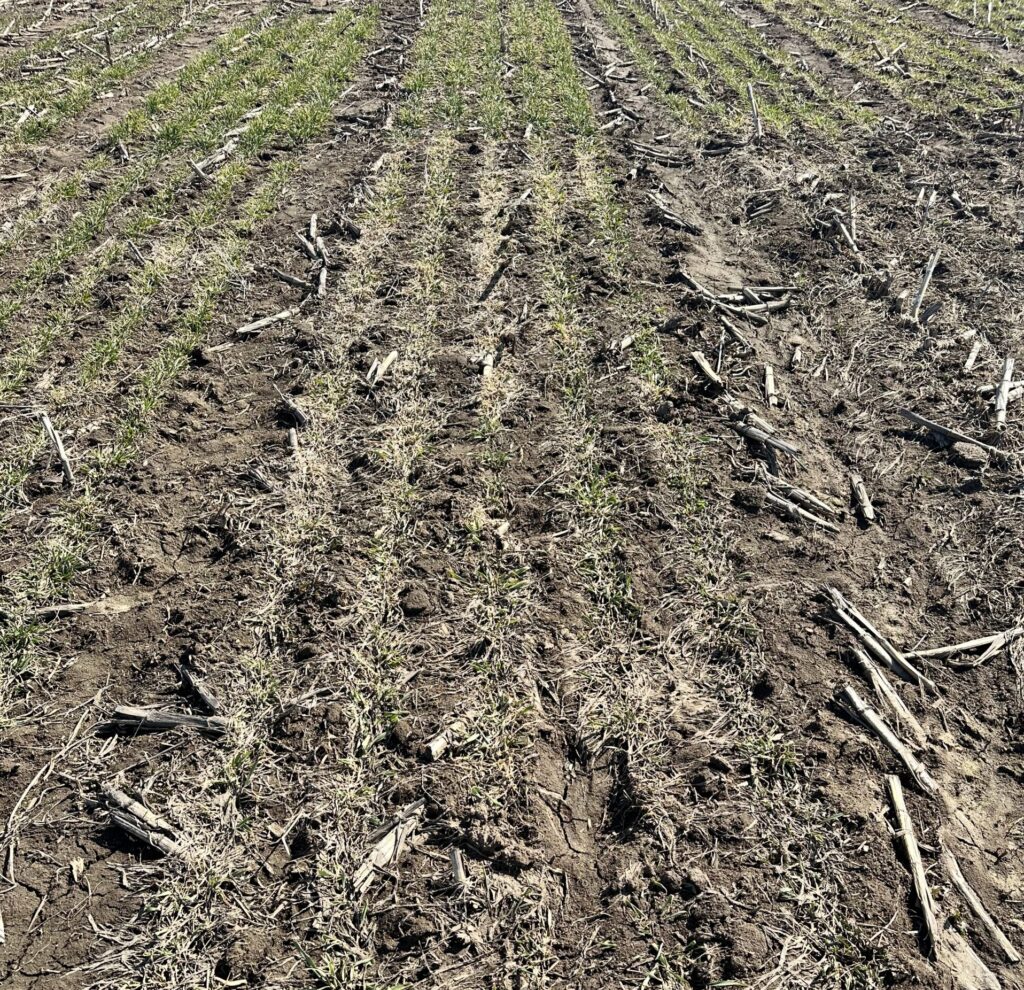
Favorable fall growing conditions are helping Midwest triticale fields establish a promising foundation for the season ahead.
Across the Midwest, warmer-than-normal fall temperatures and additional moisture have created encouraging conditions for winter triticale establishment. With good emergence and active tillering being observed in fields, many growers are seeing the benefits of favorable weather during this important stage of crop development.
For livestock producers who depend on high-quality forage, a strong fall start is welcome news as triticale heads toward winter dormancy.
Warm Fall Temperatures Extend the Growing Window
Fall establishment plays an important role in the development of a successful winter triticale crop. When temperatures remain favorable later into the season, young plants have additional opportunities to develop before winter conditions arrive.
This extended period of growth can support stronger seedling establishment, root development, and tiller formation.
For Midwest growers, the combination of timely planting and favorable fall temperatures can help triticale enter winter with a well-established stand.
Additional Moisture Supports Emergence and Tillering
Moisture availability is another important factor in fall triticale development.
This season’s additional moisture has helped create favorable conditions for seed germination and emergence in fields where drainage and soil conditions have remained suitable.
Once plants emerge, adequate soil moisture can support continued vegetative growth and tiller development.
Tillering is particularly important because it contributes to the number of potential forage-producing stems in a stand. Plants that develop healthy tillers in the fall can establish a strong foundation for spring growth.
Although final forage production depends on several factors, including winter survival and spring growing conditions, good emergence and tillering are encouraging early indicators.
Why a Strong Fall Start Matters for Spring Forage
Winter triticale is valued by Midwest livestock producers for its ability to fit into forage production systems and provide an additional forage harvest opportunity.
Healthy fall establishment can help position the crop for vigorous growth when favorable temperatures return in the spring.
For growers, the potential benefits of a well-established fall stand include:
- More uniform crop development heading into winter.
- Improved opportunities for root and tiller development.
- A stronger foundation for spring green-up.
- Greater potential to support productive spring forage growth.
While a favorable fall does not guarantee a high-yielding spring crop, it is an important first step toward reaching the crop’s potential.