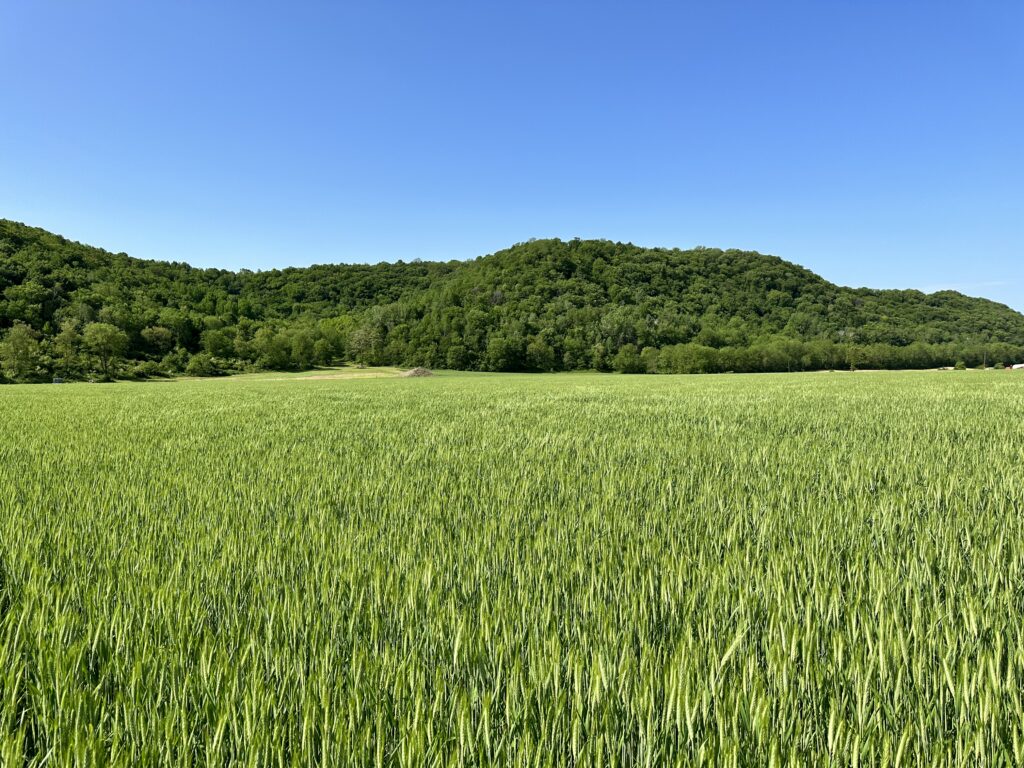
Nitrogen management in triticale forage systems is the most powerful in-season lever you have. Applied correctly, it drives both yield and feed quality. Applied incorrectly, it wastes money or pushes the crop in the wrong direction.
The Nitrogen Timeline in Triticale
Spring Top-Dress (Primary Application)
The majority of nitrogen should be applied in spring—typically 80–120 pounds of actual nitrogen per acre for forage production depending on yield goals and soil organic matter.
Nitrogen should be applied when the crop breaks dormancy and begins active growth, but before stem elongation.
Fall Application (Pre-plant or At-planting)
Apply 20–40 pounds of actual nitrogen per acre to support establishment and fall tillering. Too much fall
nitrogen can promote lush growth that increases winter injury risk.
Avoiding the Most Common Nitrogen Mistakes
- Applying too much nitrogen too late, which drives excessive stem growth.
- Spreading on frozen ground, which increases runoff risk.
- Ignoring soil organic matter contributions to nitrogen supply.
TriCal Tip: Track nitrogen timing, rate, and resulting forage quality each season to identify the program that delivers the best return for your soils and production goals.
The Spring Green-Up Advantage
Well-timed nitrogen applications translate to more dry matter per acre, higher crude protein levels, and improved digestibility at harvest.