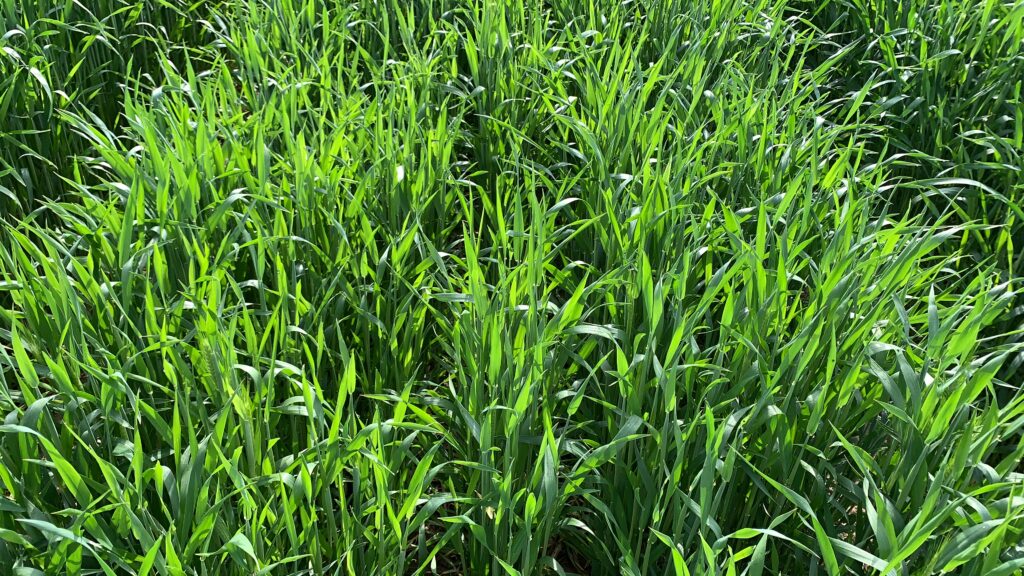
The decisions you make before planting often matter more than anything you do during the growing season.
Because triticale is grown across a broad geography, management must align with your region. What works in Idaho may not apply in Georgia. Success starts with proper timing, placement, fertility, and variety selection.
Planting Windows by Region
Planting timing drives fall establishment and spring yield potential. Plant too early and you risk excessive fall growth. Plant too late and you sacrifice critical tillering.
- Western U.S. (ID, UT, CO, irrigated West, higher elevations): September 1 – October 15
- Central & Southern Plains (KS, OK, TX Panhandle): September 15 – October 31
- Upper Midwest & Northern Plains (ND, SD, MN, WI): August 20 – September 20
- Southeastern Plains & Eastern U.S. (MO eastward through KY, TN, Carolinas, GA): October 1 – November 10
These are broad guidelines. Always confirm timing with your local TriCal associate or agronomist – find out where to buy TriCal here.
Seeding Rates and Depth
For forage production, target:
- 2 to 1.3 million seeds per acre drilled
- 3 to 1.5 million seeds per acre broadcast
For best consistency, plant at:
- 1½ inches deep
Uniform depth supports uniform emergence—and uniform stands drive yield. Get out and verify planting depth in the field by checking your drill depth. Do not assume drill settings equal actual depth.
Broadcasting Applications
Broadcast seeding can be successful, but seed-to-soil contact is critical. After broadcasting, make sure to:
- Harrow
- Roll
- Or otherwise incorporate the seed to ensure proper seed-to-soil contact
Without incorporation, stand establishment and yield potential can suffer.
Soil Conditions and Fertility Fundamentals
- Maintain soil pH between 5.8 and 7.0
- Ensure good drainage
- Address phosphorus and potassium needs based on soil test prior to planting
- Apply 20–40 pounds of nitrogen at planting, with the majority applied in spring
Triticale performs best when managed like a high-producing forage crop—not like a low-input cover crop. If you treat triticale like a high-quality forage crop, it will return like one.
Variety Selection and Seed Quality
Not every triticale variety fits every geography. Winter hardiness, maturity, and disease tolerance vary significantly across regions.
Find the correct variety for your state here.
Always prioritize certified seed to ensure varietal purity, strong germination, and seed vigor. Evaluate germination percentage and adjust seeding rates accordingly.
If you have carryover seed, confirm it is the correct seasonal type (winter vs. spring) and appropriate for your region before planting.
Before You Plant
- Confirm planting window
- Verify variety placement
- Check planting depth
- Align fertility with yield goals
When in doubt, consult your TriCal associate or local agronomist to ensure your management plan matches your geography.