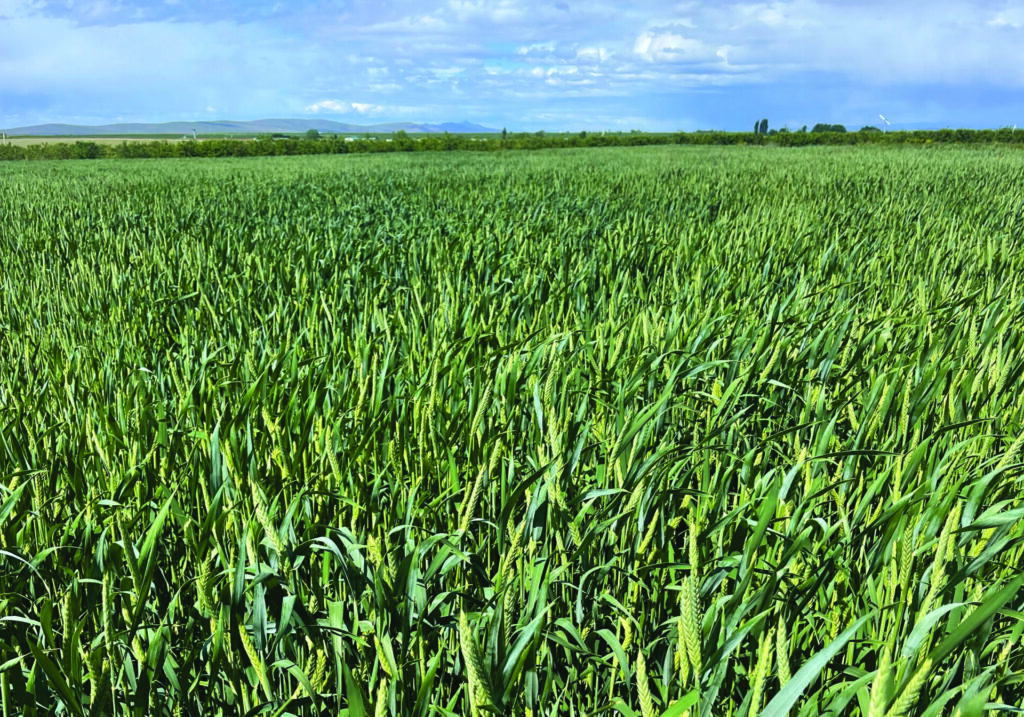
Alfalfa and grass hay prices have climbed steadily, and horse owners feel it every time a load comes off the truck. Triticale won’t replace hay in most programs — but understood correctly, it’s one of the more useful tools available for stretching a forage budget without compromising the horse.
The Forage Cost Problem Isn’t Going Away
Hay has always been the largest recurring line item in an equine feeding program, and the last several years haven’t been kind to that budget. Drought-driven alfalfa shortages, rising input costs on the production side, and tighter regional hay supplies have pushed delivered prices up in most parts of the country. For boarding facilities, breeding operations, and anyone feeding more than a handful of horses, the math is unforgiving: a modest per-bale increase compounds fast across a herd and a full year.
The instinct in a tight year is to look for a cheaper hay source. The more productive question is different: are there other forages that can be integrated into the program to reduce total reliance on purchased alfalfa and grass hay, without introducing new risk? This is where triticale earns a serious look — not as a replacement for hay, but as a complementary forage source that can offset a meaningful share of the ration.
Triticale’s Nutritional Profile, in Equine Terms
Triticale is a hybrid of wheat and rye, and its forage-quality nutritional profile sits in an interesting middle ground that’s worth understanding at a more technical level than “it’s a good grass hay alternative.”
Crude Protein and Digestible Energy
Harvested at the boot to early-heading stage, triticale forage typically tests between 12% and 16% crude protein on a dry matter basis — comparable to a mid-quality alfalfa and well above most straight grass hays. Digestible energy (DE) values for boot-stage triticale forage generally fall in a range that supports maintenance and light-to-moderate work without the caloric density of a rich alfalfa, which is a meaningful distinction for easy keepers and horses prone to excess condition.
Fiber: NDF, ADF, and Why Digestibility Matters More Than the Number
Neutral detergent fiber (NDF) in boot-stage triticale runs roughly 45% to 55%, with acid detergent fiber (ADF) typically in the high teens to low twenties. Those numbers alone don’t tell the full story. What matters more for a hindgut fermenter is NDF digestibility (NDFD) — the proportion of that fiber the horse can actually extract energy from through microbial fermentation in the cecum and large colon. Triticale harvested early, while the fiber is still relatively unlignified, tends to have favorable NDFD compared to more mature grass hays, which supports a more efficient hindgut fermentation process and a steadier supply of volatile fatty acids as an energy source.
Non-Structural Carbohydrates: The Number That Matters Most
For an equine audience, the most consequential number in any forage analysis is non-structural carbohydrate (NSC) content — the combined starch and water-soluble carbohydrate fraction that drives glycemic and insulinemic response. This is where harvest timing becomes a management decision, not just a quality decision. Triticale cut at boot stage, before significant grain fill, keeps NSC substantially lower than triticale allowed to advance toward the milk or dough stage, where starch accumulation in the developing head drives NSC upward. For horses with metabolic concerns — equine metabolic syndrome, insulin dysregulation, or a history of pasture-associated laminitis — that distinction between early-boot and late-maturity triticale forage is not a minor detail. It’s the difference between an appropriate forage and one that should be avoided entirely without lab-verified NSC values.
Where Triticale Fits in a Feeding Program
Triticale can be introduced into an equine program in a few distinct forms, each with different management implications.
Hay
Triticale cut and dried as hay, harvested at the boot to early-heading stage, is the most practical and lowest-risk entry point for most horse owners. It handles, stores, and feeds much like a good grass hay, and its protein and digestible fiber profile allow it to offset a portion of an alfalfa ration — particularly useful in maintenance, light-work, and broodmare-in-early-gestation programs where alfalfa’s higher protein and calcium load isn’t fully necessary.
Pasture and Grazing
Triticale also performs well as a grazed winter annual, offering a high-quality forage window in early spring when perennial pastures are still dormant or slow to recover. Strip grazing or limited turnout is worth considering on lush, early-vegetative triticale, since rapidly growing forage of any species can carry elevated NSC on a given day — particularly after cool, sunny conditions that favor sugar accumulation in the plant.
An Important Caution: Silage Has No Place in a Horse’s Diet
Triticale silage is a cornerstone of dairy and beef forage programs, but it should never be fed to horses under any circumstances. Ensiled forage of any species carries a real risk of Clostridium botulinum contamination, and horses are exceptionally sensitive to botulinum toxin — far more so than cattle. If triticale is being grown on an operation that also keeps horses, silage and haylage intended for livestock must be stored and handled with a hard separation from any area horses can access.
Building It Into the Ration Responsibly
- Get it tested. Don’t estimate NSC, protein, or digestible energy from a general reference table — submit a forage sample and work from actual lab values, particularly for any horse with a metabolic history.
- Introduce it gradually. As with any new forage, transition over 7 to 10 days to allow the hindgut microbial population to adjust and reduce the risk of digestive upset.
- Match harvest stage to the horse. Boot-stage triticale for metabolic or easy-keeping horses; later-cut material, if used at all, reserved for harder keepers with higher energy demands and no metabolic concerns.
- Treat it as a complement, not a wholesale replacement. Triticale forage can reasonably offset a portion of an alfalfa or grass hay ration, but total forage intake, body condition, and performance should guide the ratio — not a fixed percentage.
The Bottom Line
Triticale isn’t going to replace alfalfa in the serious performance or lactating-broodmare rations where alfalfa’s protein and calcium density genuinely earn their place. But for the much larger population of maintenance, light-work, and metabolically sensitive horses, a well-timed triticale hay or pasture program can meaningfully reduce total reliance on purchased alfalfa — without asking the horse to compromise on forage quality. In a forage market where every ton counts, that’s a tool worth understanding at more than a surface level.
TriCal Tip: Growers producing forage-first triticale for livestock customers are increasingly asked about equine-suitable cuttings. Early boot-stage harvest and a verified NSC value are the two things that make a triticale lot equine-appropriate — talk to your TriCal dealer about scheduling a cutting and getting it tested if equine hay is part of your market.